 Niverly Team
An online client raffle with proof solves a simple problem: you can engage your contact base without improvising, without loose name lists and without doubt about the result. When the raffle happens in a spreadsheet, on paper or inside a generic random picker, you may get a winner, but you lose context, history and operational trust.
For independent professionals and small businesses, that matters more than it seems. A well-structured raffle can reactivate inactive clients, support seasonal campaigns and strengthen relationships with people who already know your work. The issue is that execution is usually too manual.
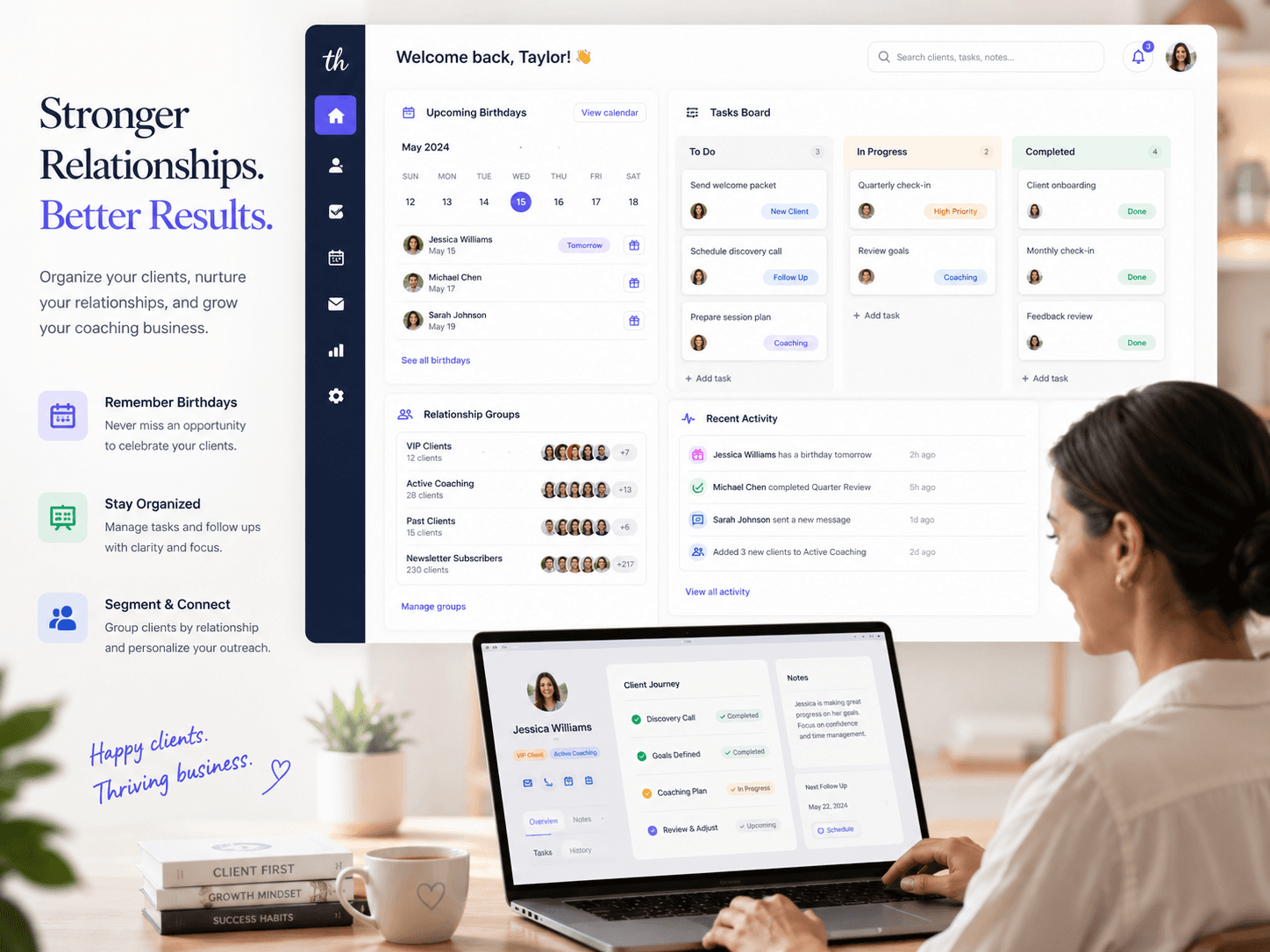
This is where Niverly fits as a lightweight CRM for relationship management. Beyond organizing clients, patients and students through a public registration link, birthdays, groups and tasks, it also lets you run raffles inside the same database, with filters, repeat-winner blocking, email notification and proof of the result.
When it makes sense to raffle within your client base
A raffle is not only about giving away a prize. It works as a base activation mechanism when there is a clear goal behind it.
Use this type of action when you want to:
- Reactivate clients who already bought from you or used your service
- Create a light seasonal campaign
- Engage specific segments, such as active students or patients from one region
- Reward recurrence without relying on manual processes
- Move your communication without sounding aggressively promotional
Instead of paying for new attention every time, you get more value from the base you already built.
What a professional client raffle needs
If your process depends on copying names into a random wheel, the problem is not only time. It is structure.
Organized database
Before running the raffle, you need to know who is actually eligible. That requires a minimally organized base, with name, group, location and clear participation rules.
Participant filters
Not every campaign should include your full base. In many cases, it makes sense to limit the raffle by:
- Birthdays this month or this week
- Gender
- Location
- Relationship group
That targeting keeps the action from becoming generic and makes the raffle more useful in the context of your business.
History and repeat-winner blocking
If the same client keeps winning, the action starts to feel noisy. A professional raffle should keep history and, when needed, exclude previous winners.
Proof of result
This is the part that builds trust fastest. When you can register the raffle date, prize, eligible participant count and winners in one proof file, the process becomes more auditable and more serious.
How Niverly handles this in practice
Niverly does not treat raffles as an isolated tool. It uses the relationship database that already exists inside the simple CRM to execute the action with less friction.
In practice, you can:
- Register prizes for future campaigns
- Define the raffle name and the number of winners
- Filter participants by month, week, gender, location and group
- Exclude previous winners to avoid repetition
- Notify winners by email when an address is available
- Generate raffle proof with prize, date and result
- Keep history for later review
That matters because the raffle stops being a disconnected marketing action and becomes part of relationship management.
Examples by niche
Clinics and healthcare professionals
You can raffle a kit, assessment or small benefit among patients with birthdays this month. Since the database is already organized, segmentation becomes easier without exposing data or relying on manual checking.
Salons, studios and recurring-service businesses
A campaign with active clients from a specific city or group can increase return visits and start conversations on WhatsApp and Instagram without feeling like a heavy promotion.
Personal trainers, teachers and consultants
Raffles can reward consistency, renewal or participation during a specific period. Group filters reduce noise and make the campaign more coherent.
Comparison: Niverly vs Generic Random Picker vs Spreadsheet
| Feature | Niverly | Generic Random Picker | Spreadsheet |
|---|---|---|---|
| Raffle inside your existing client database | ✅ Yes | ❌ No | ⚠️ Manual |
| Filters by group, location and period | ✅ Yes | ❌ No | ⚠️ Manual |
| Previous-winner blocking | ✅ Yes | ❌ No | ⚠️ Manual |
| History of completed raffles | ✅ Yes | ❌ No | ⚠️ Manual |
| Raffle proof with final result | ✅ Yes | ❌ No | ❌ No |
| Price for full features | Starts at R$19.90/month | Varies by tool | Free, but manual |
Niverly's difference: the raffle happens in the same environment where your client base is already organized, with relationship context, real filters and proof of the result.
Common mistakes in client raffles
Even with good intent, some mistakes weaken the action:
- Running the raffle without defining who is eligible
- Mixing active clients, former clients and irrelevant contacts
- Failing to register the promised prize
- Repeating winners because there is no history
- Relying on a loose screenshot as the only proof of result
When the action turns into improvisation, you lose credibility and create more rework.
Checklist: Do This in 15 Minutes
- Define the raffle goal and the prize
- Choose how many winners will be selected
- Filter the database by group, location or relevant period
- Enable repeat-winner blocking if you want to avoid duplicate winners
- Run the raffle and generate the result proof
- Save the history and communicate winners by email or WhatsApp
In the end, an online client raffle with proof is not only a promotional move. It is a way to engage your contact base with more structure and less improvisation.
- You gain operational trust: there is a rule, a filter and a record of what happened
- You increase engagement: the campaign reaches the right base at the right moment
- You centralize relationship and execution: Niverly combines simple CRM, registration, birthdays, tasks and raffles in one workflow
If your operation already depends on recurring relationships, it is worth treating raffles as part of your CRM instead of a separate process you assemble from scratch.
Frequently Asked Questions
How can I run an online client raffle with more trust?
The key is to run the raffle from an organized database, with clear eligibility rules, history and some type of proof. When you only paste names into a random tool, you may get a result, but you lose context. With filters and a record of the draw, the action becomes more credible and easier to justify to your audience.
What is raffle proof in practice?
It is a visual record of the result with data such as raffle name, prize, date, eligible participant count and winners. That helps document the action and reduces doubt about how the result was defined. For small businesses, this already creates a big credibility gain compared with loose screenshots or manual notes.
Can I run a raffle only for clients with birthdays this month?
Yes, and that is a strong use case. Instead of involving the entire database, you can limit the campaign to clients with birthdays this month or this week. That makes the action more contextual and easier to communicate. It also connects the raffle to the relationship strategy that already exists around birthdays.
What is the difference between a generic random picker and Niverly?
A generic random picker usually solves only the random selection. Niverly goes further because it starts from your existing client database, lets you filter participants, block repeat winners, keep history and generate proof. In practice, that reduces manual work and turns the raffle into an action integrated with client relationship management.
Is Niverly only for raffles?
No. The raffle module is only one part of the product. Niverly works as a simple CRM for independent professionals and small businesses, with a public registration link, contact-base organization, birthday reminders, automated messages, list and kanban tasks, and engagement actions such as raffles with proof.
Ready to organize your client base?
Create your personalized registration link in 3 minutes. Free to start.
Start Free